How to scope an MVP without burning the budget
The most expensive mistake in software has nothing to do with code quality, hosting bills or developer day rates. It's building the wrong thing. Products fail far more often because nobody wanted them than because they were badly made — and every feature added before that question is answered multiplies the cost of finding out.
An MVP — minimum viable product — is the discipline that protects you. Done well, it gets a real product in front of real customers for a fraction of the full-vision budget. Done badly, it becomes a small version of the same expensive mistake. The difference is in the scoping.
Start with the job, not the features
Every founder arrives with a feature list. Accounts, dashboards, notifications, admin panels, integrations. The list feels like the product. It isn't. The product is the one job a customer will pay to have done.
So start there. Complete this sentence in one line: a customer pays us because our product does ___. If the sentence needs an "and", it isn't finished. A booking tool that lets clients book. A quoting tool that produces a quote in minutes instead of days. One job.
Every candidate feature then faces a single test. Does the product still do its job without this? If yes, it's not in the MVP. Be ruthless, because every founder underestimates how much can wait. Login systems, settings pages, five payment options, that clever dashboard — almost all of it can come later, funded by evidence rather than hope.
Prototype before you build
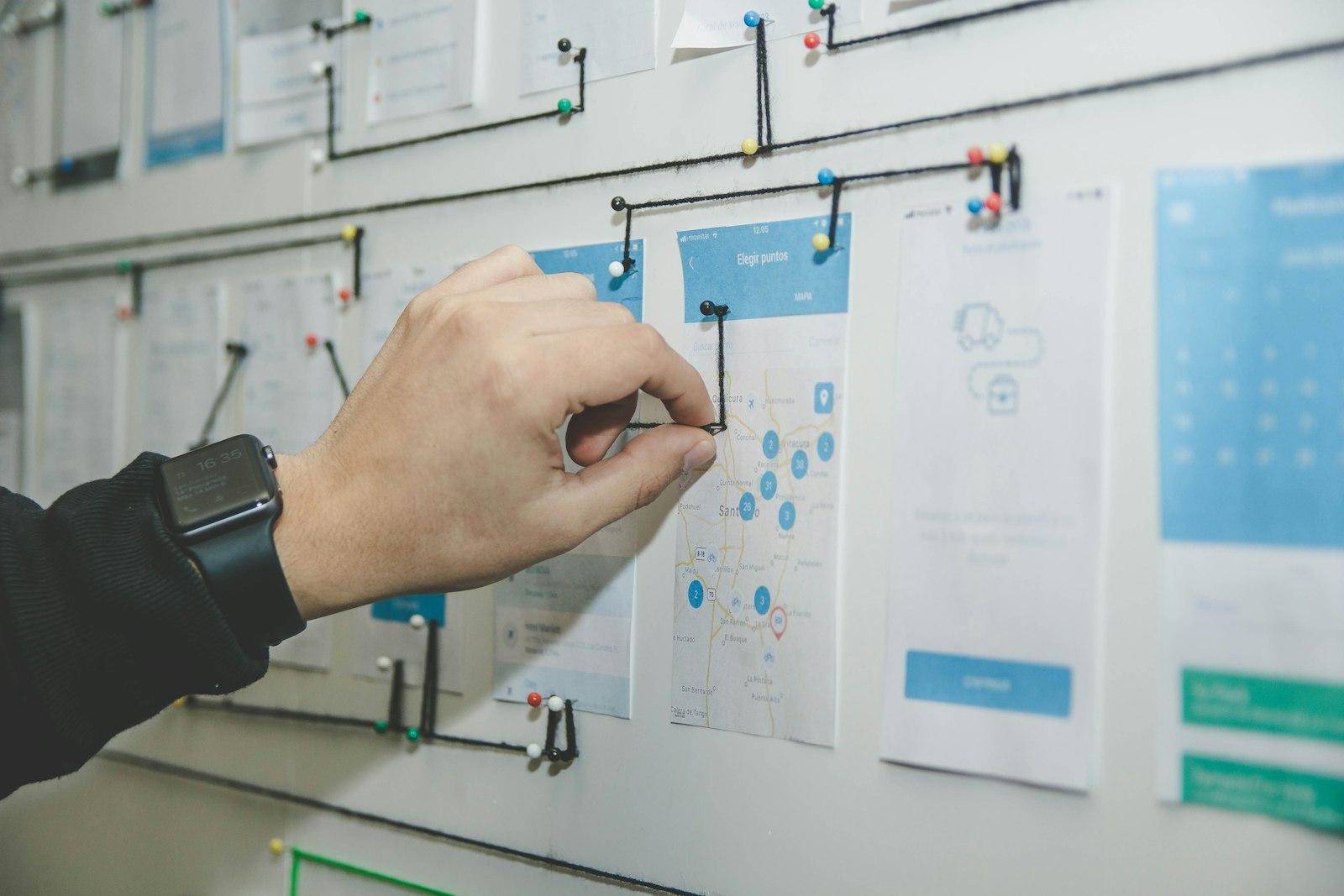
There's a step between the idea and the code that too many projects skip. A prototype — clickable screens with no working machinery behind them — lets real users walk through the product in days rather than months.
Prototypes are brutally efficient at exposing assumptions. Users get lost where you thought the flow was obvious. They ignore the feature you thought was the hook. They ask for something you'd dismissed. Every one of those discoveries costs pocket change at the prototype stage and real money once it's built.
A week of prototyping routinely saves a month of development. It's the cheapest insurance available in software.
Choose boring technology
MVPs get scoped in features but sunk in technology choices. The temptation is to build for the scale you're dreaming of — the architecture that could handle a million users, the cutting-edge stack from the conference talk.
Resist it. Proven, unglamorous technology gets you to market faster, breaks less and is easier to hire for later. Your first hundred users don't care what the product is built on. They care whether it does the job. Scale problems are good problems, and they're solvable when they actually arrive — with revenue helping to pay for the solution.
The same logic applies to AI. If intelligence is the product's core job, build it in. If it's decoration, save it for version two.
Define what launch is for
An MVP without a question attached is just a small product. Before the build starts, write down what the launch needs to teach you and what result would justify the next investment.
Make it concrete. Do users complete the core flow without help? Do trial users convert when asked to pay? Does anyone come back in week two? Pick the two or three numbers that would genuinely change your next decision, and instrument the product to capture them from day one.
This is also your defence against the most dangerous phrase in product development. "While we're at it." Scope creep rarely arrives as a big request — it arrives as a dozen reasonable ones. A written definition of done gives you something to hold each of them against.
What this means for budget
Scoped this way, an MVP behaves differently as an investment. The first release costs a fraction of the full vision. It arrives while the market opportunity is still open. And every pound spent after launch is directed by evidence — real usage, real feedback, real revenue — rather than by guesswork in a planning meeting.
The full vision doesn't die in this process. It gets funded by its own proof, feature by feature, in the order customers demonstrate they want. That's the difference between a roadmap and a wish list.
The short version
Name the one job. Cut everything the job doesn't need. Prototype before you code. Build on boring technology. Decide what launch must prove. Then hold the line.
Founders who follow that sequence spend less, learn faster and still have budget left when the product tells them what to build next. The ones who don't usually get one expensive attempt.
Have a product idea you're weighing up? Book a call — we'll help you find the one job, and tell you honestly what it would take to build.